
Traveling with a pet


Going on board
At the airport

Woof! I hope my passport has a stamp that says 'Very good boy'?
How to check in with an animal
At the check-in counter, you will need to show your passport and your pet's veterinary passport.
We will conduct a visual inspection of the animal's condition and check if it is comfortable in the carrier. Typically, if owners consider all the points we described earlier, we will have no questions, and your pet will be able to continue the journey with you.


Meow... I don't mind flying, but only if the flight attendant scratches behind my ears!
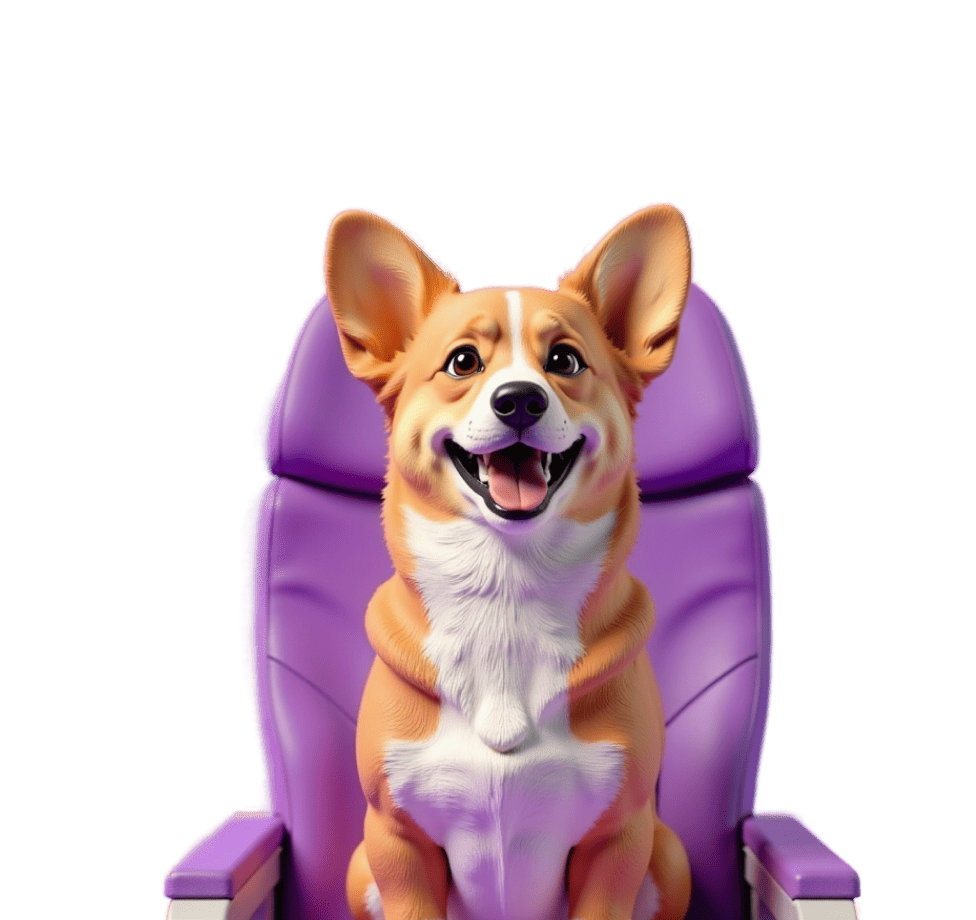
How pets fly: in the cabin and baggage compartment
If your pet is flying with you in the cabin, you will be assigned a seat on board specifically designated for traveling with animals.
If your pet is flying in the baggage compartment, we will carefully weigh the carrier with the pet at the oversized baggage counter, and then move it to a preparation room away from loud noises and drafts.
Before loading baggage onto the aircraft, airport staff will bring out the carts with animals, cover them with a protective tarp in case of bad weather, and place the carriers in the baggage compartment, securely fixing them at a safe distance from other luggage.
Upon arrival, the carrier with the pet can be picked up in the oversized baggage claim area.
Lifehack
The secret to a calm flight - introduce your pet to the carrier in advance

Start training early - at least 2-3 weeks before the trip:
1
Introduction - leave the carrier open at home so the animal can freely explore it.
2
Positive associations - place treats, toys, or a favorite bedding inside.
3
Short "sessions" - briefly close your pet in the carrier, gradually increasing the time.
4
Trial outings - take the animal outside in the carrier (for example, to the car and back).
5
Calmness - don't force the process if your pet is nervous.

Woof! Suitcases packed, veterinary passport ready - time to board!